
Millions of households across the UK are seeing an increase in Universal Credit payments from 6 April 2026 as part of the government’s wider changes to the benefit system.

The increase is part of what ministers have described as a rebalancing of Universal Credit, with the government raising the standard allowance while reducing the health-related top-up for some new claimants.
The changes are aimed at helping households with day-to-day living costs, while also reshaping how support is distributed within the system.
Nearly 4 Million Households Set to Benefit
The government has said that nearly 4 million households will benefit from the increase to the Universal Credit standard allowance.
This uplift forms part of a longer-term plan that will push the standard allowance above inflation over several years. Ministers have previously said this could be worth around £725 more in cash terms by 2029/30 for a single claimant aged 25 or over.

New Universal Credit Standard Allowance Rates for 2026/27
From 6 April 2026, the monthly standard allowance has increased as follows:
| Household Type | 2025/26 Rate | 2026/27 Rate |
|---|---|---|
| Single under 25 | £316.98 | £338.58 |
| Single 25 or over | £400.14 | £424.90 |
| Couple, both under 25 | £497.55 | £528.34 |
| Couple, one or both 25 or over | £628.10 | £666.97 |
These figures relate to the standard monthly allowance only and do not include extra elements such as child support, housing support, carer amounts, or health-related additions.
Annual Impact of the Increase
The new rates mean claimants will receive more support over the course of the year.
For example:
| Household Type | Monthly Increase | Approximate Annual Increase |
|---|---|---|
| Single under 25 | £21.60 | £259.20 |
| Single 25 or over | £24.76 | £297.12 |
| Couple, both under 25 | £30.79 | £369.48 |
| Couple, one or both 25 or over | £38.87 | £466.44 |
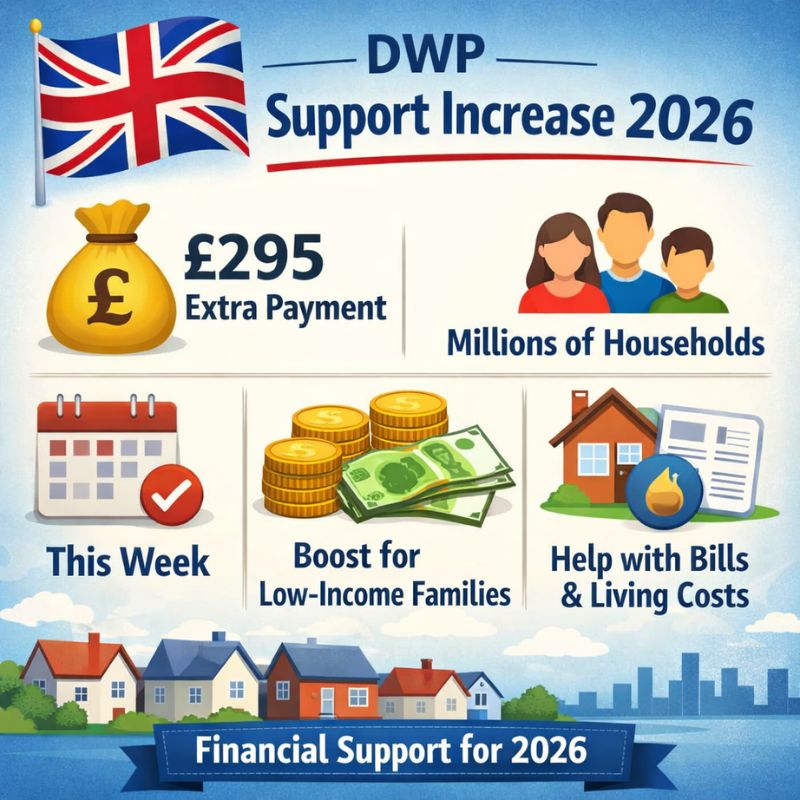
This means the commonly quoted £295 annual boost applies broadly to a single claimant aged 25 or over, based on the difference between the old and new monthly standard allowance.
Universal Credit Health Element Cut for New Claimants
At the same time as the standard allowance is rising, the Universal Credit health element has been reduced for new claimants.
The revised monthly amounts are:
| Health Element Category | 2025/26 Rate | 2026/27 Rate |
|---|---|---|
| Limited Capability for Work and Work-Related Activity amount | £423.27 | £217.26 |
| Pre-2026 claimant / severe conditions claimant / terminally ill claimant | £423.27 | £429.80 |
This means that new claimants entering the health-related part of Universal Credit will receive a much lower rate than many existing claimants, while certain people already in the system remain protected under the higher amount.
Government Says the Changes Are a Rebalancing of Support
The government has argued that these reforms are intended to rebalance support in Universal Credit by strengthening the basic rate while reducing the gap between the standard allowance and the health top-up.
Ministers say this is meant to tackle what they describe as an imbalance in the system and reduce incentives that may keep people out of work unnecessarily.
Two-Child Limit Removed From Universal Credit
One of the biggest changes from 6 April 2026 is that the two-child limit has ended for Universal Credit.
This means households can now receive the child element for every child they are responsible for, rather than being restricted to just two children under the old rules.
However, the overall benefit cap still remains in place, which means some families may still find that their total award is limited.
Child Element Rates From April 2026
The child element rates for 2026/27 are:
| Child Element | 2025/26 Rate | 2026/27 Rate |
|---|---|---|
| First child born before 6 April 2017 | £339.00 | £351.88 |
| First child born on or after 6 April 2017 / subsequent children | £292.81 | £303.94 |
Now that the two-child limit has ended, these child amounts can be paid for all qualifying children in the household, subject to the benefit cap where applicable.
Other Universal Credit Elements Also Increased
Several other parts of Universal Credit have also gone up for the 2026/27 year.
| Element | 2025/26 Rate | 2026/27 Rate |
|---|---|---|
| Carer amount | £201.68 | £209.34 |
| Higher work allowance | £684.00 | £710.00 |
| Lower work allowance | £411.00 | £427.00 |
| Childcare costs maximum for one child | £1,031.88 | £1,071.09 |
| Childcare costs maximum for two or more children | £1,768.94 | £1,836.16 |
These increases may provide additional support for working families, carers, and households with childcare expenses.
Why These Changes Matter
Universal Credit supports a large number of working households as well as those who are out of work. For many people, even a relatively modest increase in the standard allowance can make a difference to paying for food, rent, bills, and transport.
At the same time, the sharp reduction in the health element for new claimants is likely to remain controversial, especially for households dealing with long-term illness or disability.
Final Overview
From 6 April 2026, Universal Credit claimants are receiving higher standard allowance payments, with the biggest annual increase for a single claimant aged 25 or over coming to just under £300 a year.
The reforms also include the removal of the two-child limit, which means families can now receive the child element for all qualifying children, although the benefit cap still applies.
However, while the main allowance is going up, the health element for new claimants has been cut significantly, showing that the government’s changes are increasing support in some areas while reducing it in others.