
With the Easter bank holiday in full swing and a lot of people expected to be on the roads over the long weekend, drivers are being reminded to double-check that their information is correct and up to date. People who have certain medical conditions must tell the Driver and Vehicle Licensing Agency (DVLA) or face fines of up to £1,000 for not doing so.
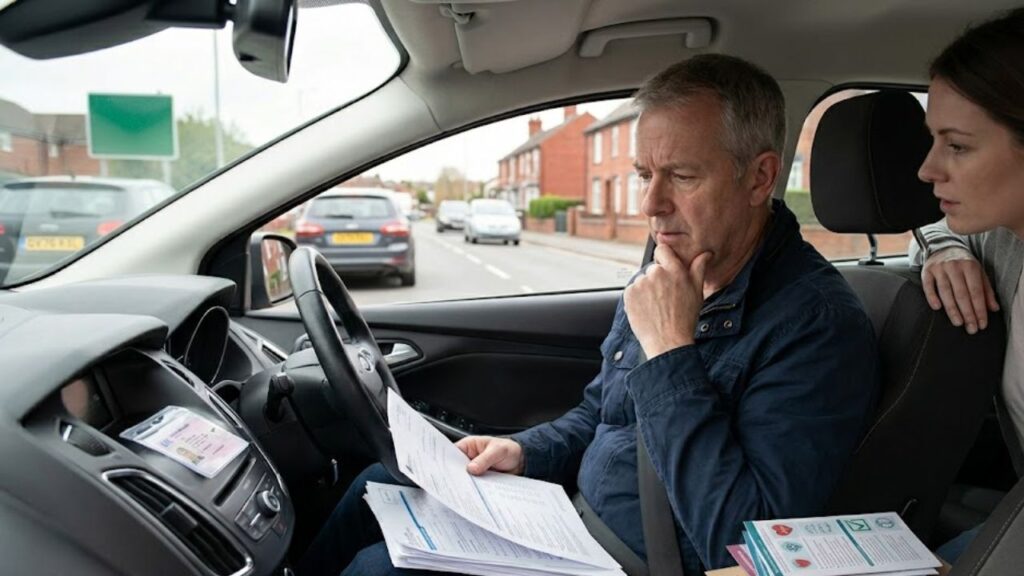
Drivers can find out if they need to tell the DVLA about their condition by going to Gov.uk, where they can fill out the necessary forms and questionnaires. The Mirror says that there are different forms for different conditions and disabilities. If you’re not sure about the process, you can call the DVLA directly.

Gov.uk says, “If you have a driving license and you get a medical condition or disability that needs to be reported, or if your condition or disability has gotten worse since you got your license, you must tell DVLA.” It goes on to say, “If you don’t tell DVLA about a condition that could make it hard for you to drive safely, you could be fined up to £1,000.” If you have an accident, you could also be charged with a crime.
On December 27, 2025, cars were stuck in traffic on the M3 motorway near Winchester, England. The M3 motorway is a major transportation link for the area. It connects the M25 to the seaports in southern England. Anna Barclay/Getty Images took this picture.
Drivers must tell the DVLA about certain medical conditions (Image: Getty) Get the most recent breaking news from the Liverpool Echo on WhatsApp. We and our partners send our community members special offers, deals, and ads. You can check out whenever you want. More information
If you have cancer or lymphoma, you only need to tell the DVLA if
- You have problems with your brain or nervous system.
- Your doctor says you might not be able to drive.
- Because of your condition, you can only drive certain types of vehicles or need to make changes to your vehicle.
- The side effects of your medicine could make it hard for you to drive safely.
If you don’t know if cancer will affect your ability to drive, talk to your doctor.
There are also other conditions on the list, such as:
- Fear of open spaces
- Problems with alcohol
- Alzheimer’s disease
- Amputations
- Angiomas or cavernomas
- Spondylitis that causes ankylosing
- Anorexia nervosa
- Nervousness
- Aneurysm of the aorta
- Cyst on the arachnoid
- Arrhythmia
- A malformation of the arteries and veins
- Arthritis
- Ataxia
- ADHD
- AIDS
- Manic depression, also known as bipolar disorder
- Clots in the blood
- Pressure in the blood
- Injury to the brachial plexus
- Cyst, brain abscess, or encephalitis
- Aneurysm in the brain
- Bleeding in the brain
- Brain injury from trauma
- Tumor in the brain
- Broken bones
- Syndrome of Brugada
- Surgery for burr holes
- Cataracts
- Cataplexy
- Central venous thrombosis (if problems persist after one month)
- Cerebral palsy
- Problems with thinking
- Heart disease from birth
- Fits, seizures, or convulsions while driving
- Driving with déjà vu
- Dementia and defibrillators
- Depression (if it makes it hard for you to drive safely)
- Double vision (diplopia)
- Dizziness or vertigo (if it comes on suddenly, makes you unable to move, or happens again and again)
- Using drugs
- Empyema (in the brain)
- Essential tremor (if it makes it hard for you to drive safely)
- Eye problems, like glaucoma
- Syndrome de Guillain Barré
- Head injury (very bad)
- Heart failure (if it makes it hard for you to drive safely)
- Pounding heart
- Hemianopia
- Hodgkin’s lymphoma
- Huntington’s disease
- Hydrocephalus
- Low blood sugar
- Brain damage from low oxygen levels
- Bleeding in the brain
- Korsakoff’s syndrome
- Labyrinthitis (if symptoms persist for three months or more)
- Disabilities in learning
- Dementia with Lewy bodies
- Disability in the limbs
- Long QT syndrome
- Syndrome of Marfan
- Medulloblastoma
- Meningioma (if it makes it hard for you to drive safely)
- Diseases of the motor neurons
- Muscular dystrophy
- Myasthenia gravis
- Myoclonus
- Narcolepsy
- Blindness at night
- Obsessive-compulsive disorder (if it makes it hard for you to drive safely)
- Too much sleepiness
- Atrophy of the optic nerve
- Heart pacemakers
- Schizophrenia with paranoia
- Paraplegia
- Parkinson’s disease
- Neuropathy in the periphery
- Disorder of personality
- Tumor in the pituitary gland
- Post-traumatic stress disorder (PTSD) (if it makes it hard for you to drive safely)
- Psychosis
- Depression that is psychotic
- High blood pressure in the lungs
- Very bad memory issues
- Stroke (if you still have problems after a month)
- If you still can’t drive three months later, surgery
- Syncope, which can include blackouts or fainting
- Seizures and epilepsy
- Sleep apnea
- Schizoaffective disorder
- Schizophrenia
- Scotoma
- Severe communication problems (if they make it hard for you to drive safely)
- Conditions of the spine, injuries, or surgery on the spine
- Bleeding in the subarachnoid space
- Fast heart rate
- Tourette’s syndrome (if it makes it hard for you to drive safely)
- Vision through a tunnel
- Syndrome of Usher
- Less clear vision
- Dizziness
- Defect in the visual field
- VP shunts Wolff-Parkinson-White syndrome
A close-up of a pink driving license card with the European Union flag and the words “DRIVING LICENSE” in blue. The card has more information, like the holder’s name and a barcode that can be used to identify them.
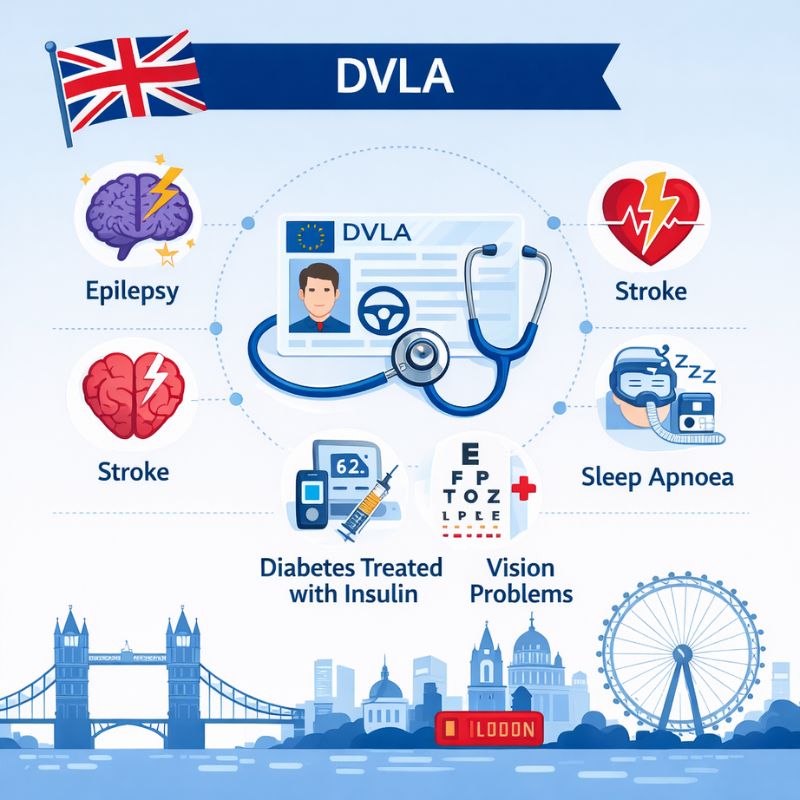
Gov.uk says that after you tell the DVLA about your health, “You’ll get a letter with the decision.” Depending on your health, a healthcare professional may need to give you more information for your application. The DVLA might call your GP or consultant, set up a medical exam, ask you to take a driving test, or ask you to take a vision test.
It goes on to say, “If your application needs to be sent to a doctor, it may take longer than normal. This is not the case if you are applying for a bus or truck license.” While the DVLA is looking at your application, you can usually keep driving.