
Certain motorists in the UK will be required to pay a new mileage-based tax depending on how many miles they drive each year.

The new charge, known as Electric Vehicle Excise Duty (eVED), was announced by the government at Budget 2025 and will come into force from April 2028.
It will apply specifically to electric cars and plug-in hybrid cars, with drivers paying the charge alongside their existing Vehicle Excise Duty (VED).
How the New Mileage Tax Will Work
Under the new system, drivers will be charged based on the number of miles their vehicle covers over the course of a year.
The government has set the planned rates as follows:
| Vehicle Type | Rate Per Mile |
|---|---|
| Electric cars | 3p |
| Plug-in hybrid cars | 1.5p |
This means the more a qualifying vehicle is driven, the more tax the owner will have to pay.

What the New Tax Could Cost Drivers
For many motorists, the annual cost could add up to several hundred pounds.
For example:
| Annual Mileage | Electric Car Cost | Plug-in Hybrid Cost |
|---|---|---|
| 5,000 miles | £150 | £75 |
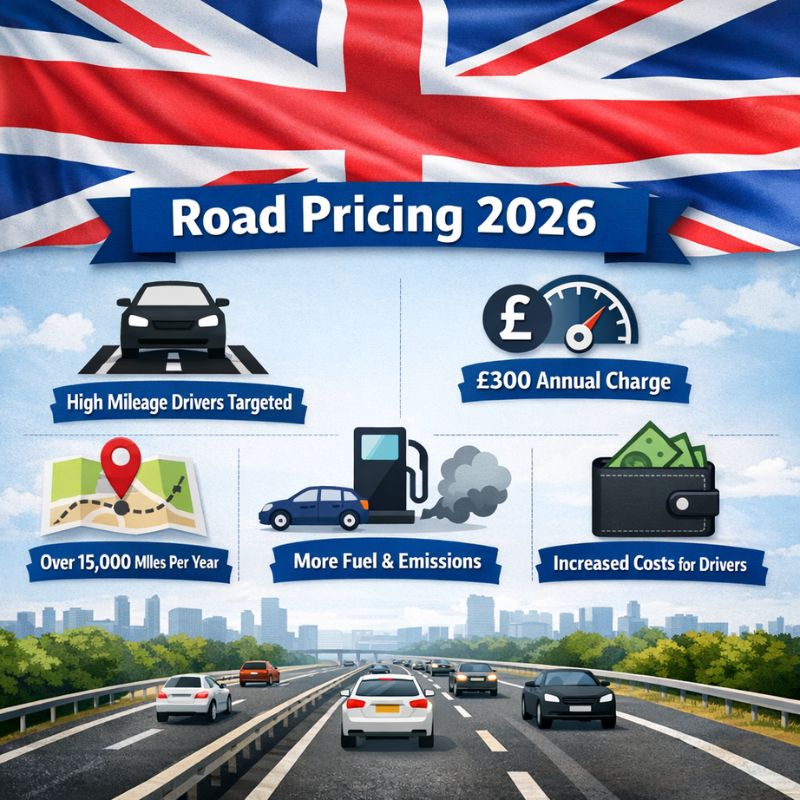
| 10,000 miles | £300 | £150 |
| 15,000 miles | £450 | £225 |
| 20,000 miles | £600 | £300 |
An electric car driver covering 10,000 miles a year would therefore pay £300 annually under the new mileage charge, in addition to normal vehicle tax.
Who Will Be Affected
The new tax will not apply to all drivers.
It is aimed at:
| Affected Group | Will the Tax Apply? |
|---|---|
| Electric vehicle owners | Yes |
| Plug-in hybrid owners | Yes |
| Petrol vehicle owners | No |
| Diesel vehicle owners | No |
The policy means that drivers switching to electric vehicles over the next few years will need to factor in these extra running costs.
Why the Government Is Introducing the Tax
The government says the new charge is intended to create a fairer system as more drivers move away from petrol and diesel vehicles.
At the moment, petrol and diesel motorists effectively pay towards road use through fuel duty, which rises with how much they drive. Electric vehicles do not pay fuel duty, so ministers say a new system is needed as EV adoption grows.
The government has also said the mileage charge reflects the fact that electric vehicles still contribute to congestion and wear and tear on roads.
Concerns About the Impact on EV Adoption
Critics have warned that the new pay-per-mile system could discourage some people from switching to electric vehicles.
This concern comes at a time when drivers are already being encouraged to move away from petrol and diesel cars ahead of the planned 2030 ban on new pure petrol and diesel car sales.
Some motoring commentators argue that adding more costs for EV drivers could make the transition less attractive, especially as financial incentives for switching have gradually reduced.
EV Drivers Already Facing More Charges
The mileage tax is another sign that electric vehicle owners are being brought more fully into the UK tax system.
They have already started paying Vehicle Excise Duty under newer rules, and from April 2028 they will also face this additional mileage-based charge.
Final Overview
From April 2028, owners of electric cars and plug-in hybrid cars in the UK will have to pay a new pay-per-mile tax on top of existing VED.
The rates are set at 3p per mile for electric cars and 1.5p per mile for plug-in hybrids. For drivers covering average or high annual mileage, this could add hundreds of pounds a year to motoring costs.
Anyone planning to switch to an electric vehicle before 2028 should keep this upcoming tax change in mind when calculating long-term ownership costs.