Older people across the UK may be able to reduce their TV Licence bill to nothing if they meet the qualifying conditions for a free licence. Since 1 April 2026, the standard annual TV Licence fee has increased to £180, while a black and white licence costs £60.50. For pensioners on a low income, however, there may be ways to reduce this cost or avoid it altogether.
Free TV Licence for People Aged 75 and Over
A free TV Licence is available to households where the licence holder is aged 75 or over and they, or their partner living at the same address, receive Pension Credit.
If you already receive Pension Credit, you can apply for the free licence from the age of 74, but you must continue paying until the end of the month before your 75th birthday. After that, the free licence can take effect.
Pension Credit Could Unlock More Than Just a Free TV Licence
Pension Credit is a benefit for people over State Pension age who are on a low income. It can increase weekly income and also acts as a gateway to a range of other support.
From the 2026/27 rates, Pension Credit can top income up to the following amounts:
| Household Type | Weekly Amount |
|---|---|
| Single person | £238.00 |
| Couple | £363.25 |
In addition to boosting income, Pension Credit may also help people qualify for extra support such as help with housing costs, Council Tax relief, and a free TV Licence for eligible over-75s.
When You Need a TV Licence
You need a TV Licence if you do any of the following:
| Activity | TV Licence Needed |
|---|---|
| Watch live TV on any channel | Yes |
| Record live TV | Yes |
| Watch live TV on streaming platforms | Yes |
| Use BBC iPlayer | Yes |
| Watch only on-demand content on services other than BBC iPlayer | No |
This rule applies across devices, including TVs, laptops, tablets, and phones.
When You May Not Need a TV Licence
If you do not watch or record live TV on any channel or streaming service, and you do not use BBC iPlayer, then you may not need a TV Licence at all.
This means you can usually watch the following without a licence, as long as the content is not live:
- Netflix on demand
- Amazon Prime Video on demand
- Disney+ on demand
- YouTube videos that are not live broadcasts
- DVDs and Blu-rays
- Catch-up content on services other than BBC iPlayer
If you stop needing a TV Licence before your current one expires, you may also be able to cancel it and request a refund for the unused period.
Other Ways to Reduce the Cost
If you do not qualify for a free licence through Pension Credit, there are still a few ways to lower the amount you pay.
| Discount Type | Details |
|---|---|
| Blind concession | 50% discount if you or someone you live with is registered blind (severely sight impaired) |
| Residential care concession | Reduced-fee licence may apply in certain residential care homes, supported housing, or sheltered accommodation |
| Shared household licence | One licence may cover the whole household in certain shared living situations |
Blind Concession
People who are blind (severely sight impaired) can apply for a 50% discount on the cost of a TV Licence.
That means the licence cost can be reduced to:
| Licence Type | Discounted Cost |
|---|---|
| Colour TV Licence | £90.00 |
| Black and white TV Licence | £30.25 |
This concession can also cover other people living in the same household. It does not apply to people who are only partially sighted.
Reduced Fee in Residential Care or Sheltered Accommodation
Some people living in residential care homes, supported housing, or sheltered accommodation may qualify for an Accommodation for Residential Care (ARC) concessionary licence.
Where the accommodation and resident meet the conditions, the concessionary licence costs £7.50 per room, flat, or bungalow.
Shared Households and Joint Living Arrangements
TV Licences are issued per household, not per person. This means that in some shared homes, one licence may cover everyone living there.
However, this depends on the living arrangement. If people have separate tenancy agreements and watch TV in their own rooms, each person may need their own licence. If the property is shared under one household arrangement and TV is watched in a common area, one licence may be enough.
Important Warning About Watching Without a Licence
Anyone who watches or records live TV, or uses BBC iPlayer, without a valid TV Licence can face enforcement action.
The penalty can be:
| Offence | Possible Penalty |
|---|---|
| Watching or recording live TV without a licence, or using BBC iPlayer without one | Fine of up to £1,000 |

Final Overview
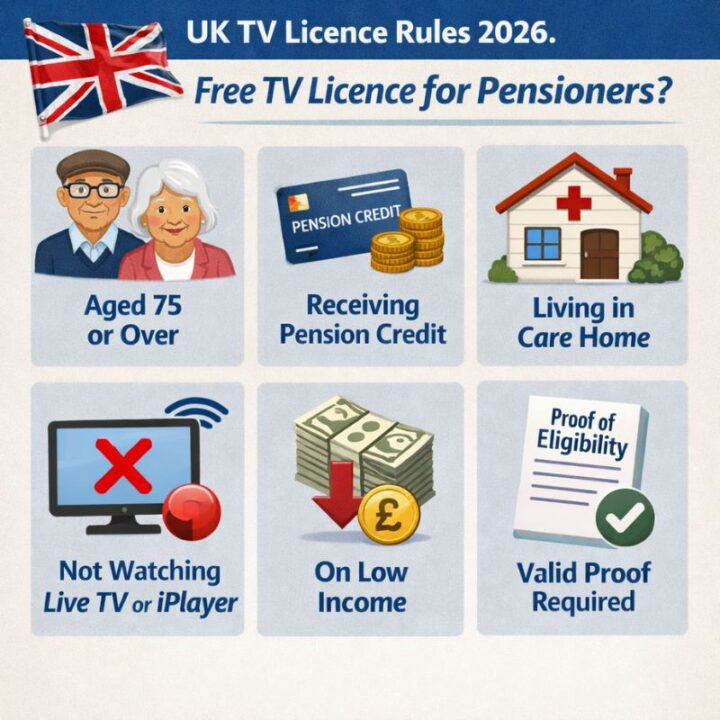
For older pensioners, the easiest way to cut the TV Licence bill to £0 is by qualifying for Pension Credit and meeting the age requirement for the over-75 free licence.
For others, savings may still be possible through the blind concession, the ARC reduced-fee scheme, or by cancelling the licence entirely if they no longer watch live TV or use BBC iPlayer.
Anyone unsure about their status should check the official eligibility rules carefully before applying or cancelling.