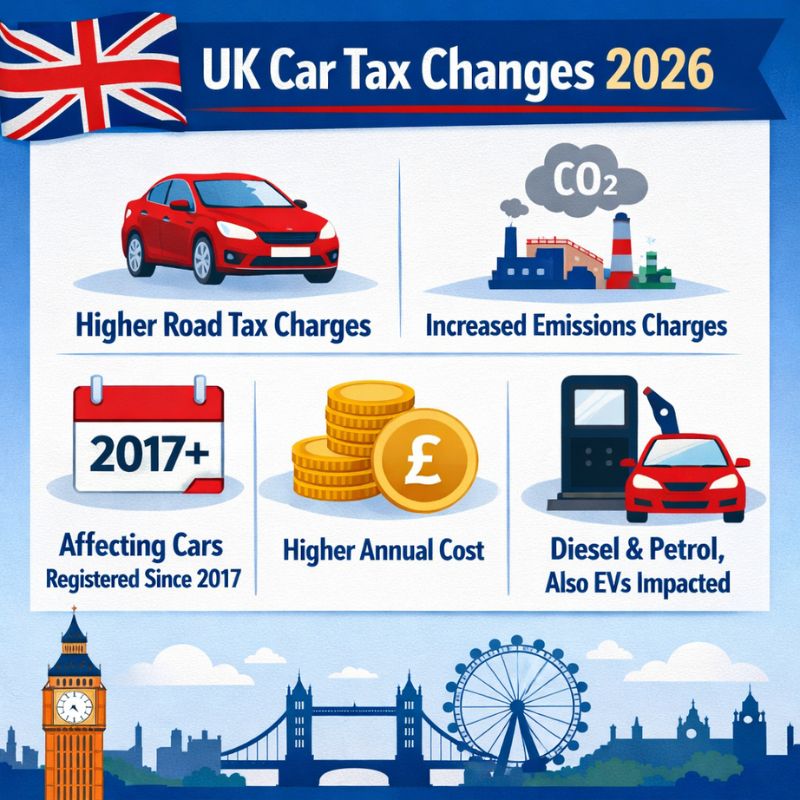
Starting on April 1, people who drive older cars will have to pay more in Vehicle Excise Duty, which is also called road tax annual. The annual road tax on cars registered after April 2017 will go up. The type of fuel it uses, when it was registered, and how much CO2 it makes all affect how much you pay in road tax.
The government website says that the current VED structure based on CO2 bands was introduced in 2001 when average UK new car emissions were 178 gCO2/km but now say that the new VED system retains and strengthens the CO2-based FYRs to incentivise uptake of the very cleanest cars while moving to a flat SR in order to make the tax fairer, simpler and sustainable.

The Express says that “almost every owner of a gas diesel or electric car will have to pay more starting in April when new Vehicle Excise Duty (VED) rates go into effect.” The rules say that older drivers in the UK have to pay the same fees as everyone else, and there are no discounts based on age.
People who registered a car between April 1, 2017 and now will see their car tax go up from £195 to £200. According to the gov.uk website, “This measure changes Vehicle Excise Duty (VED) for cars that were first registered on or after April 1 2017.” The amount of carbon dioxide (CO2) that a car emits will affect the First Year Rates of VED.
After a police incident, several streets in the city center were closed off live updates. Live updates.
After a big makeover, the town in North Wales is ready for new visitors The Standard Rate will stay the same at £140 for all years after that. For cars that don’t pollute, the SR will be £0. If you buy a car that costs more than £40,000, you’ll have to pay an extra £310 on your SR for the first five years. The current VED system will not change, and all cars that were first registered before April 1 2017, will stay in it.
Drivers who will be most affected are those who buy new petrol and diesel cars. The VED charges will go up by £200, from £5,490 to £5,690.
You have to pay the showroom tax for your first year if you buy a new car. After April 2026, the first-year car tax rate will go up from £110 to £115 for cars that emit between 1 and 50 grams of CO2 per kilometer. These rates are only good for the first year you have the car. Starting in the second year, you will pay the regular car tax rate, which is going up from £195 to £200. Birmingham Live says.
New first-year car tax rates will be in effect starting April 1. 0g/km–£10 (no change)
The rates are different for cars registered before 2017 because they are divided into different CO2 bands. If the emissions are lower, the vehicle tax will be lower as well.
From April 2026, cars that were registered between March 1, 2001 and March 31, 2017 will have to pay car tax.
Up to 100g/km: £20 (no change)
£20 for 101-110g/km (no change)
£35 for 111–120g/km (no change)
121–130g/km: £170; 131–140g/km: £200; 141–150g/km: £225; 151–165g/km: £275; 166–175g/km: £325; 176–185g/km: £360; 186–200g/km: £410; 201–225g/km: £445; 226–255g/km: £760; 255+g/km: £790;